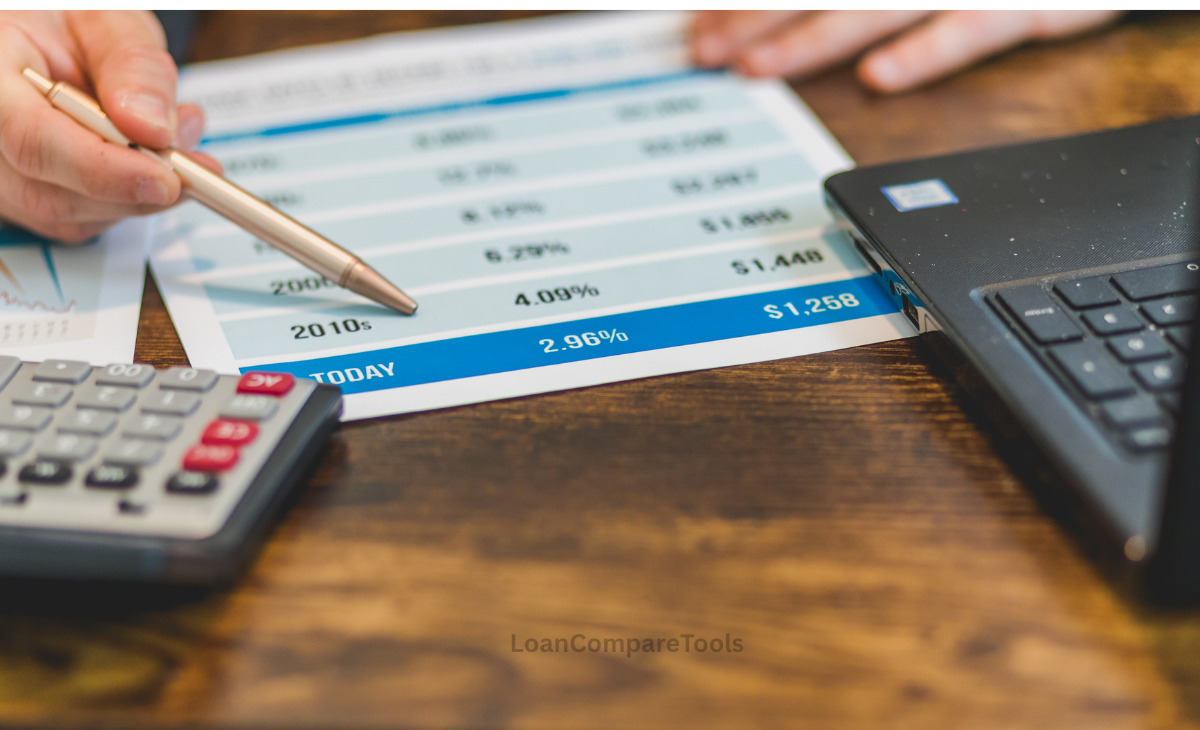

A $50,000 student loan sounds manageable on paper—until you see what it actually does to your monthly budget. The payment isn’t just a number; it’s a long-term commitment that can shape everything from your rent choices to your ability to save.
At Loan Compare Tools, we regularly see borrowers underestimate how repayment structure—not just loan size—determines financial pressure. A $50K balance can feel very different depending on your interest rate and term.
Let’s break it down in real numbers.
Quick Answer
For a $50,000 student loan, your monthly payment typically falls between:
- $530 – $580/month on a standard 10-year plan
- $350 – $420/month on a 15-year plan
- $280 – $330/month on a 20-year plan
(Assuming interest rates between 5%–7%)
Key Takeaways
- Monthly payment depends heavily on interest rate + repayment term
- Lower payments usually mean much higher total interest paid
- Federal loans offer flexible repayment options, private loans usually don’t
- Extending your term reduces pressure—but increases long-term cost
Real Payment Breakdown (Side-by-Side)
Here’s what a $50,000 loan looks like under different scenarios:
| Term | Interest Rate | Monthly Payment | Total Paid |
|---|---|---|---|
| 10 years | 5.5% | ~$540 | ~$64,800 |
| 10 years | 7% | ~$580 | ~$69,600 |
| 15 years | 6% | ~$420 | ~$75,600 |
| 20 years | 6.5% | ~$375 | ~$90,000+ |
👉 Notice the trade-off:
- Lower monthly = higher lifetime cost
- Higher monthly = faster debt freedom
What Most Borrowers Get Wrong
A common mistake I’ve seen: focusing only on the monthly payment.
Let’s say:
- You stretch your loan from 10 to 20 years
- You “save” ~$200/month
Sounds great—until you realize:
- You may pay $20,000–$30,000 more in interest
That’s not a small difference. That’s a car, a down payment, or years of savings gone.
Real Borrower Scenario
A borrower earning ~$55,000/year takes on a $50K student loan.
Option A: 10-Year Plan
- ~$550/month
- Tight, but manageable with discipline
Option B: 20-Year Plan
- ~$370/month
- Easier monthly—but long-term drag
What usually happens:
- They pick the lower payment
- Life expenses increase over time
- Loan sticks around far longer than expected
That’s how student debt quietly becomes a decade-plus burden.
How Lenders (and the Government) Evaluate Your Payment
For federal loans, repayment is standardized—but affordability still matters.
For private refinancing or new loans, lenders look at:
1. Debt-to-Income Ratio (DTI)
- Student loan payment directly affects approval for:
- Mortgages
- Auto loans
- Personal loans
2. Income Stability
- Stable job = easier approval for refinancing
- Variable income = higher perceived risk
3. Credit Profile
- Higher score → better refinance rates
- Lower score → stuck with higher payments
Income-Driven Repayment (IDR) Option
If you’re struggling, federal loans offer income-based plans:
- Payments based on 10%–20% of discretionary income
- Could drop your payment to:
- $150–$350/month (depending on income)
But here’s the catch:
- Loan term extends to 20–25 years
- Interest continues accumulating
- Total repayment can exceed $100,000+
Hidden Costs Borrowers Don’t See Coming
⚠️ Interest Accumulation
Even when payments are low, interest keeps building
⚠️ Lifestyle Constraints
$500/month = $6,000/year
That impacts:
- Savings
- Investing
- Housing decisions
⚠️ Refinancing Traps
Lowering your rate can help—but:
- You lose federal protections (like IDR or forgiveness)
When a $50K Loan Payment Is Actually “Affordable”
In real-world terms:
- $500/month is manageable if you earn:
- $60,000–$75,000+ annually
- Below that, it starts putting pressure on:
- Rent
- Emergency savings
- Daily expenses
A good rule I’ve seen hold up:
👉 Keep student loan payments under 10–15% of your take-home pay
How to Lower Your Monthly Payment (Smart Moves)
- Extend your loan term (short-term relief, long-term cost)
- Refinance at a lower interest rate (if your credit allows)
- Switch to income-driven repayment (federal loans only)
- Make extra payments when possible to reduce interest
FAQs
How much is a $50,000 student loan per month?
Typically $530–$580/month on a 10-year plan, depending on your rate.
Can I lower my payment?
Yes—by extending your term, refinancing, or using income-driven plans.
Is $50,000 in student loans a lot?
It’s above average and can be significant depending on your income.
What’s the fastest way to pay it off?
- Stick to a 10-year plan (or shorter)
- Make extra principal payments
- Avoid extending the term unnecessarily
Editorial Note from Loan Compare Tools
Most borrowers don’t struggle because of the loan amount—they struggle because they didn’t fully understand the repayment structure.
At Loan Compare Tools, we encourage borrowers to look at:
- Monthly affordability
- Total repayment cost
- Long-term financial impact
A lower monthly payment might feel like relief—but the real goal is financial flexibility over time.
Bottom Line
A $50,000 student loan typically means $500–$600 per month on a standard plan.
But the real decision isn’t the payment—it’s how long you want that payment in your life.
Shorter term = higher monthly pressure, lower total cost
Longer term = easier monthly, heavier long-term burden
If you want, I can calculate a custom payment based on your income and interest rate or show you the best way to reduce total repayment.